
How to do a newborn photoshoot at home
By the Baby Photo Art team · Updated
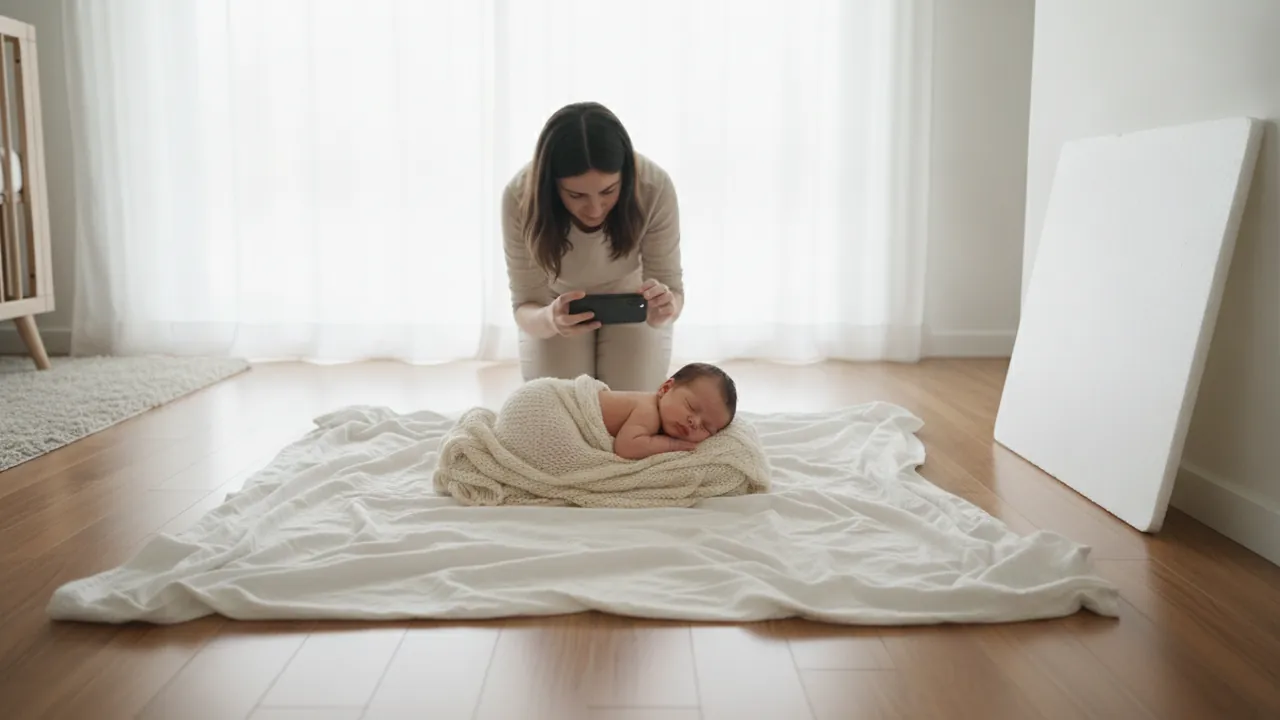
You can do a newborn photoshoot at home with a phone, a window and a plain blanket. Set up beside the biggest window in the house, shoot right after a feed, keep the baby warm and supported, and take short bursts of photos rather than one long session.
What you need for a newborn photoshoot at home
- A smartphone with a clean lens. Wipe it with a soft cloth, because a fingerprint makes the whole photo hazy.
- A large window, ideally with sheer curtains to soften sunlight.
- A plain backdrop such as a flat sheet, a muslin cloth or a neutral blanket over a firm mattress or the floor.
- One or two wraps or blankets in cream, oatmeal or gray.
- A white foam board or poster board to bounce light, if you have one.
- A helper, so one adult can hold the baby while the other shoots.
How to set up light for a newborn photoshoot at home
Light makes a phone photo look professional. Put the baby's blanket next to a window, with the face turned toward the light but not into direct sun. Switch off lamps and ceiling lights, because they mix colors and turn skin yellow. Open morning or late afternoon light is soft. Midday sun through glass is harsh, so use sheer curtains or move into the shade near a door. Never use the flash. If shadows on one side of the face look too dark, place the white board opposite the window and bounce light back onto the baby.
How to choose a backdrop for a home newborn photoshoot
Plain, wrinkle-free fabric gives the cleanest result. Lay it over a firm surface and tuck the edges under so nothing can bunch near the baby. Neutral colors suit newborn skin best, while strong colors reflect onto the face. If you want a patterned or colored backdrop, check the baby photo backgrounds and frames ideas, or add a background later when you edit.
A 30-minute plan for a home newborn photoshoot
- Before the baby, set up the backdrop and reflector, warm the room, and lay out wraps and a pacifier.
- Feed and change the baby just before you start so they are full and dry.
- In the first ten minutes, shoot swaddled sleeping photos and close-ups of the face, hands and feet.
- In the next ten, shoot unwrapped photos on the back, parents holding the baby and a profile.
- For the last ten, take detail shots and any sibling photo, then stop and cuddle.
If the baby cries, stop, feed, soothe and come back later. You will get more usable photos in two calm 15-minute sessions than in one long, frustrating one. The full list of poses is in newborn photo ideas.
Phone camera settings that matter for newborn photos
- Tap on the baby's face to set focus and exposure, then slide brightness down a little if skin looks washed out.
- Hold the phone with two hands and your elbows against your body. A cheap tripod helps with overhead shots.
- Use the main lens and step closer rather than zooming, which lowers quality.
- Turn on the grid and place the baby's eyes on the upper third line.
- Use burst mode for any movement and delete the blurry frames later.
- Portrait mode can cut around fingers and blankets badly, so check the edges before keeping a shot.
Safety rules for a newborn photoshoot at home
Photographer safety guidance gives the same advice again and again. Never leave a newborn alone on a posing surface, never rely on a prop to hold the baby, and keep an adult within arm's reach for every pose. The complex poses you see online are composites of several frames. Photographers often warm the room into the high 70s Fahrenheit for unwrapped newborns, but that is professional habit rather than medical advice, so watch for sweat or a flushed chest and dress the baby if they feel warm. For sleep, follow your pediatrician's safe-sleep rules and never leave a baby asleep on a posing surface.
Common newborn photoshoot problems and fixes
| Problem | Likely cause | Fix |
|---|---|---|
| Yellow or orange skin | Lamps mixed with window light | Switch off every lamp, use only the window |
| Dark, grainy photos | Not enough light | Move closer to the window, wait for a brighter hour |
| Blurry baby | Slow shutter in dim light | Brace the phone, use burst mode, add light |
| Stretched or messy backdrop | Loose fabric | Tuck edges under, iron or smooth the cloth |
| Red blotches on skin | Normal newborn skin | Shoot black and white or edit gently later |
How to pose a newborn with a parent
Photos with a parent are the ones children treasure later. Keep the parent's clothing simple, and avoid shiny jewelry that can scratch the baby. Wear a plain top in a color close to the blanket. Hold the baby close, with the head supported, and tilt your head toward the baby. A helper behind the phone can ask you to look down, which gives a soft expression. If you are alone, set the phone on a tripod with a timer and burst mode, and take many photos in a row.
How to shoot newborn photos with siblings
Siblings need a plan. Give the older child a clear task, such as holding a toy or sitting still for a count of three. Seat them first, then place the baby in their lap with an adult kneeling right beside. Keep the session to a couple of minutes, and stop before the older child is tired. A photo of the older child's hand on the baby's foot works well when a full photo is too hard. For a newborn with parents and siblings, see newborn family photos for the poses and the health rules.
When to stop a newborn photoshoot
Signs that it is time to stop include crying that does not settle after a feed, an arched back, red hands and feet that feel cold or a baby who turns away from the light. There is no prize for finishing the list. You can always shoot again in a few days, and the baby will look different. Keep the memory of the shoot as a good one for everyone, and spend the last few minutes just holding the baby.
How newborn, 3-month and 6-month photo sessions differ
A newborn sleeps through most of a session, so the main work is keeping the baby warm and settled. At 3 months, the baby is awake more and wants to look at things, so you need toys and sound. By 6 months, the baby moves a lot, so you shoot at the baby's pace and aim for short, fast bursts. Plan the same setup, but change the expectations. For a newborn, the goal is a calm set of sleeping photos. For older babies, it is a lively set of faces.
How to clean up the background before a newborn photoshoot
Look through the phone camera before you place the baby and move anything that looks messy: cables, toys, washing, a bin. A tidy frame takes a minute and saves hours of editing. Check the edges of the picture too, since a stray sock at the corner is easy to miss. If the room is crowded, tighten the framing and shoot close.
A low-cost prop shelf for home newborn photos
For a newborn, the prop list is much shorter and has firm safety limits, which are set out in newborn photo props.
- A plain white or cream bedsheet, ironed.
- A knit blanket in a neutral color.
- A basket for a toy, not for the baby.
- A small bunch of flowers in a jar, placed out of reach.
- A wooden letter or number for the age.
- A soft toy of a known size, for scale.
How to back up your newborn photoshoot
When you have finished, copy the best photos to a folder and a second place. Phones fill up fast, and a baby session of 200 frames can fill a lot of storage. Delete the blurry ones the same day while you remember which ones you meant to keep. Name the folder with the date and the baby's age, so you can find the set a year from now.
What to do after a newborn photoshoot at home
Copy the files off your phone, pick the best ten and do a gentle edit with the baby photo editing guide. Before you post anything, remove location data using the steps in how to remove location data from baby photos. For ideas beyond the newborn stage, see baby photoshoot ideas, and for the overall list of guides go to baby photo ideas.
Questions about a newborn photoshoot at home
Can I do a newborn photoshoot at home?
Yes. A phone, a big window and a plain blanket are enough. Shoot after a feed, keep the room warm and stay within arm's reach of the baby for every shot.
How do I take newborn photos with my phone?
Use window light, turn off the flash, tap the baby's face to focus and hold the phone steady. Step closer instead of zooming and take burst shots to catch a sharp frame.
What is the best time of day for a newborn photoshoot?
Mid-morning or late afternoon gives soft, even window light. The baby's timing matters more, and right after a feed is when most newborns sleep best.
How warm should the room be?
Photographers often warm the room for unwrapped newborns, commonly to the high 70s Fahrenheit. That is a working habit, not a medical rule, so watch for sweating or a cool body.
Do I need props for a home newborn photoshoot?
No. A clean sheet, one blanket and a wrap are enough. Never use props that hold the baby in place or have to balance, because a parent's hands are the best prop.
How long should a home newborn photoshoot take?
Plan about 30 to 45 minutes with breaks for feeding, diaper changes and settling. Stop when the baby is unsettled, since a calm baby sets the pace.
What should a newborn wear for a home photoshoot?
A plain swaddle, a simple onesie or just a diaper in a warm room works. Choose soft neutral colors and skip tight headbands.