
Newborn photo ideas for the first two weeks
By the Baby Photo Art team · Updated
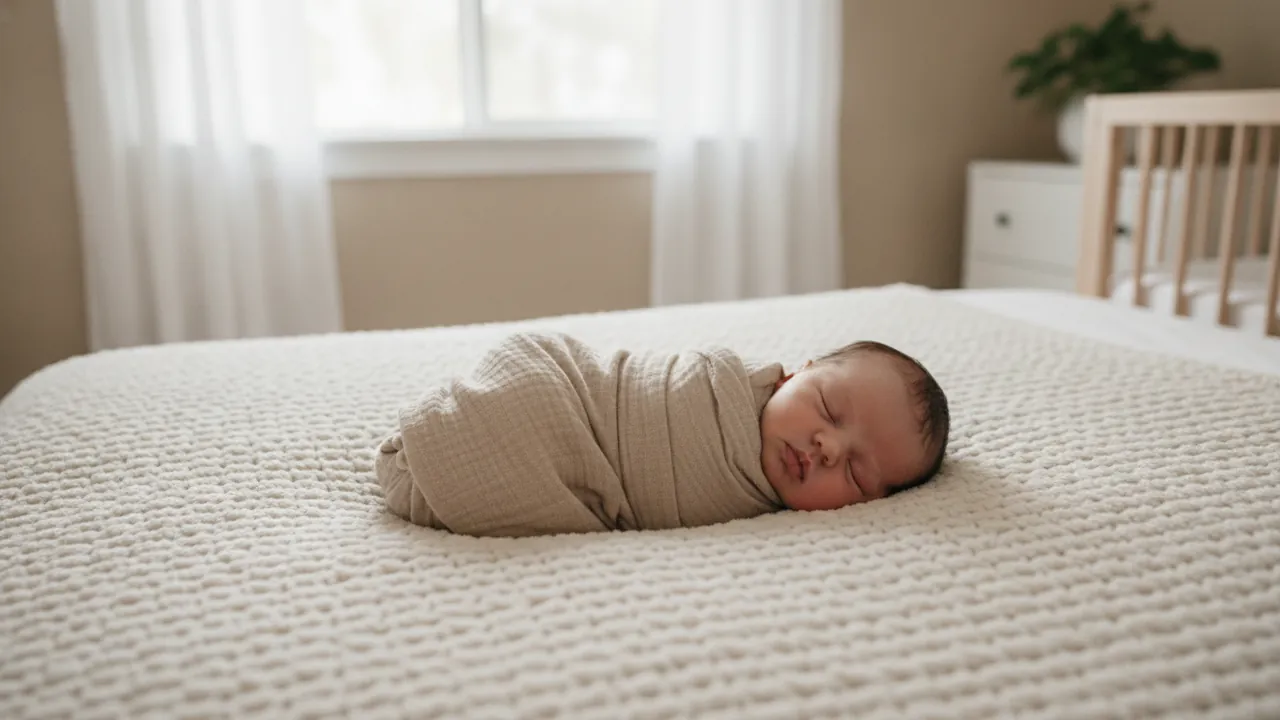
The best newborn photo ideas are simple ones: a sleeping baby on a plain blanket by a window, close-ups of tiny hands and feet, and a parent's hands holding the baby. You need no props or studio, and the first two weeks are the easiest time because newborns sleep deeply and stay curled up.
Why the first two weeks matter for newborn photos
Many newborn photographers book sessions in the first 5 to 14 days. Babies that young sleep through a lot of handling, keep the curled-up shape they had in the womb, and still have the soft newborn look that fades quickly. You can use the same window at home. Plan a short session right after a feed, when a full baby is drowsy, and expect to stop and start. If you want lighting, timing and a backdrop spelled out, the newborn photoshoot at home guide covers the whole setup.
Newborn close-up photo ideas that always work
If you only take five photos, take these. Close-ups hide a messy room, need no posing and show the detail you will want in ten years.
- A tiny hand curled around an adult finger, shot from above with the background out of focus.
- Both feet resting in a parent's palm. Foot length changes more than you think in a month.
- The face in profile. Lie beside the baby at eye level and shoot across the nose, which shows lashes and cheeks without needing the eyes open.
- Small details such as the hair swirl, the lips, a wrinkled knee or the hospital bracelet.
- A black and white copy of the same frame. Newborn skin can look red or blotchy, and gray tones often look calmer.
Full-body newborn poses that are realistic for parents
Most poses on social media look easy in the final photo and are not. These five are manageable without training.
- Baby on their back on a blanket, slightly swaddled or in a diaper if the room is warm, shot from directly above.
- A stretchy swaddle in oatmeal, cream or sage, which keeps the baby settled and looks good on camera.
- Side-lying on a firm, flat blanket with a rolled towel behind the back as a wedge, while you stay within arm's reach.
- In a parent's arms, chest to chest or cradled, with the parent in a plain top. This is the one grandparents frame.
- With a sibling. An older child sitting down, baby supported in their lap by an adult who stays beside them for the whole shot.
Outfits, wraps and colors for newborn photos
Neutral colors keep attention on the face. Cream, oatmeal, soft gray, dusty pink and sage are kind to newborn skin tones, which change from week to week. Avoid busy patterns near the face and skip tight headbands, which leave marks. A muslin cloth, a knit blanket and a plain wrap give you three or four looks without a purchase. If you want colored backgrounds later, the baby photo backgrounds guide lists easy options.
Newborn poses and props to skip
Poses where a baby is balanced in a basket, hung from a branch or propped on their chin are made by photographers from several frames, with an adult holding the baby in each one, and the hands are edited out afterward. They are not something to try alone. Photographer safety guidance is consistent on three points. Never leave a newborn unattended on a posing surface, never rely on a prop to hold the baby, and keep your hands within reach at all times. Watch for sweating or a flushed chest, which means the baby is too warm. For sleep itself, pediatric safe-sleep advice says a baby sleeps on their back on a firm, flat surface with no loose bedding. A photo is never a reason to break that rule, so do not leave a baby asleep on a pillow or beanbag after the shoot. The full list of what is safe and what is composite-only is in newborn photo props.
Light, timing and speed for newborn photos
Window light does almost everything. Put the baby on a bed or the floor beside a large window, turn off overhead lights and shoot from the side where the light comes in. Turn off the flash, which flattens skin and startles a baby. In dim light, move closer to the window rather than raising brightness in the phone. Keep the room comfortably warm, work for 20 minutes at a time, and stop for feeds and diaper changes. Babies do not hold a mood for long, and being relaxed about that makes for better photos.
Newborn photo ideas with the family
Parents often appear in no photos at all in the first weeks. Ask someone to take a few of you, even in pajamas. Good frames include a parent's hand under the baby's head, a baby asleep on a chest, both parents with the baby between them, and a grandparent holding the baby by a window. A pet sitting near a sleeping baby is sweet, as long as the animal is calm and an adult is watching. Poses, sibling photos, what to wear and the visitor health rules are in newborn family photos, and the first pictures in the delivery room are covered in hospital newborn photos.
Newborn photo ideas for a birth announcement
Keep two or three clean, plain frames for the birth announcement. A swaddled baby with the face visible and a simple background reads best on a card. See birth announcement photo ideas for layouts and wording.
Posed or lifestyle newborn photos: which to choose
There are two broad styles of newborn photo. Posed photos use wraps, blankets and careful positioning to make a baby look tidy and curled up. Lifestyle photos record the baby as they are, in a parent's arms, on a sofa or in a cot, with whatever is around. Posed photos need more time and more help. Lifestyle photos are easier and often more moving later. Most families end up with a mix, and if you only have the energy for one, choose lifestyle. A baby yawning on a parent's shoulder will mean more in ten years than a perfect wrap.
Eyes open or closed in newborn photos
Newborn eyes are open in short windows, and they often look unfocused. Do not wake a sleeping baby for the sake of open eyes. Take sleeping photos first, then watch for the quiet alert stage after a feed, when the baby may look around calmly. A photo with the eyes just opening is a gift. Avoid shining a bright light at the baby, and keep the room dim and soft.
How to use a wrap in newborn photos, step by step
- Lay a stretchy wrap flat on the blanket, with one end toward the baby's feet.
- Place the baby on their back with shoulders just below the top edge.
- Bring one side across the baby's body, tucked gently under the opposite arm, and repeat with the other side.
- Fold the bottom up over the feet, leaving room for the hips to move.
- Check that the wrap is snug but not tight, with two fingers fitting at the chest.
- Photograph, then unwrap soon after. Wraps are for photos and short stretches, and a baby should not stay in one that rides up near the face.
A short newborn photo shot list to print
- Swaddled baby asleep, from above.
- Face in profile, at eye level.
- Hand on a parent's finger.
- Feet in a parent's palm.
- Baby on a parent's chest.
- Both parents with the baby.
- Baby and sibling, with an adult close by.
- Baby in a family heirloom blanket or outfit.
- Baby in the cot or bassinet, as they will be day to day.
Tick these off over a week, not in one day. Most of them take less than five minutes each.
Common worries about newborn photos
Parents worry that the baby looks red, wrinkly or yellow. Newborn skin changes quickly, and many of these things fade within weeks. If a yellow color becomes stronger, tell your pediatrician, since that can be jaundice and needs a check. For photos, a black and white copy or a small edit fixes the look. Some parents also worry about hair, a flat head or a cone shape from birth. These too change, and you will be glad to have a record of how the baby really looked.
What to do after a newborn photo session
You rarely need more than a small brightness change and a straight crop. If you want to fix color or remove a blotch, the guide to editing baby photos explains how to keep skin looking natural. Once the newborn weeks pass, a monthly baby photo routine keeps the rest of the first year covered, and the baby photoshoot ideas list picks up where this page ends. The baby photo ideas home page links every guide.
Questions about newborn photo ideas
What are good newborn photo ideas?
Good ideas include close-ups of hands, feet and a profile, a sleeping baby swaddled on a plain blanket, a parent holding the baby and a supervised sibling photo.
When is the best time to take newborn photos?
Many photographers aim for the first 5 to 14 days, when newborns sleep deeply. Photograph right after a feed, and keep sessions short.
What should a newborn wear for photos?
Plain, soft and stretchy clothing works best, such as a swaddle, a simple onesie or just a diaper in a warm room. Skip tight headbands.
How do I get a newborn to sleep during photos?
Feed first, keep the room warm and quiet and handle the baby calmly. If the baby wakes and fusses, stop, feed and try again later.
Are newborn photo poses safe to try at home?
Simple poses on a firm, flat surface with an adult within arm's reach are fine. Hanging and balancing poses are composites that need a person holding the baby.
Should newborn photos be taken in the hospital?
A few photos are lovely, but hospital light is harsh and babies look reddest in the first hours. Plan a calmer home session in the first two weeks.
How many newborn photos should I take?
Take many frames in short bursts, since newborns move and only some are sharp. Keep the best 15 to 30 and delete blurry duplicates.