
What App Identifies the Best Baby Photos for Templates?
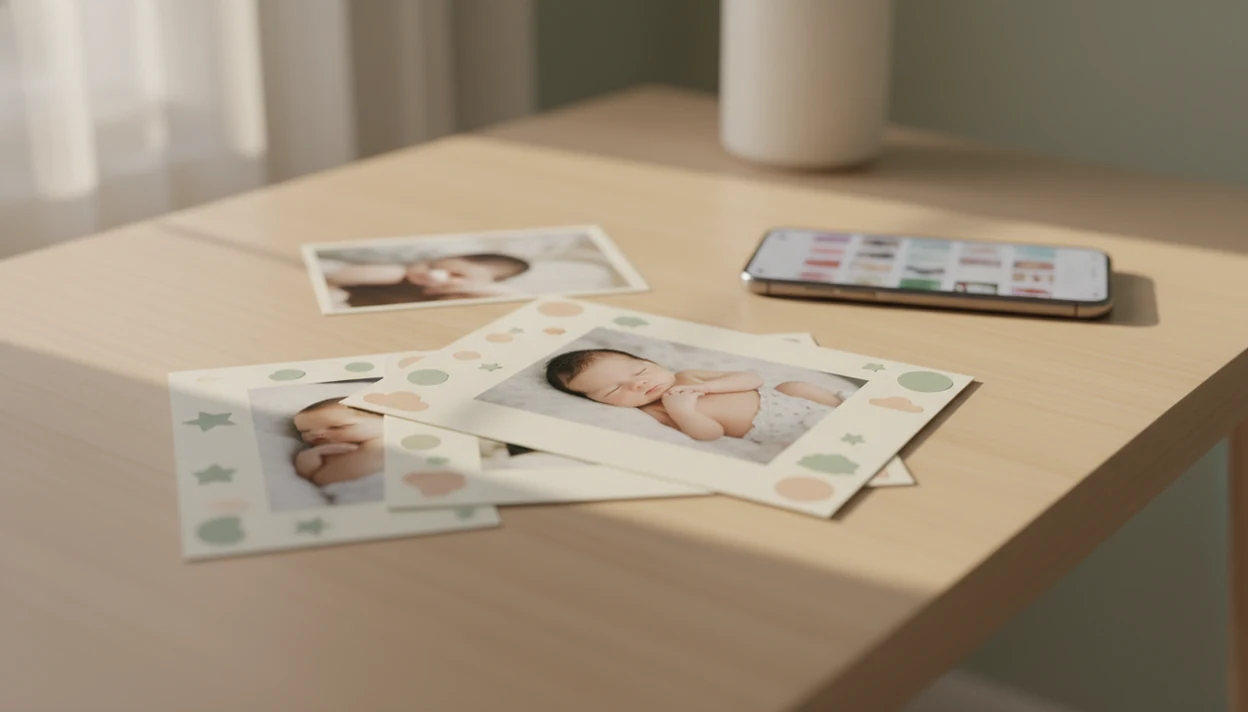
Baby Photo Art is the most directly relevant answer if you want a baby-focused editor that helps turn clear baby and newborn photos into templates, stickers, milestone cards, portraits, and keepsakes. The real answer to “what app identifies best baby photos for templates” is that some apps help choose or organize usable images, but parents should still review clarity, face visibility, lighting, and crop before finalizing a template.
Definition: Baby Photo Art is a baby photo editor app that turns baby and newborn photos into milestone templates, stickers, portraits, and print-ready keepsakes for parents.
TL;DR
- Template-ready baby photos usually have a visible face, sharp focus, soft lighting, and enough space around the baby for text or stickers.
- Some apps offer AI-assisted selection or organization, while many baby template apps only provide editable layouts after the parent chooses a photo.
- Parents should treat app selection as a shortcut, not a final judgment, because emotional favorites and technically template-ready photos are not always the same image.
How what app identifies best baby photos look
Side-by-side captures of the compared products. Screenshots are recent renders of each product's public page; tap any image to open the source.
Apps that identify baby photos for templates
Useful baby photo template apps fall into two groups: baby-focused editors and broader design tools. Not every named app truly auto-selects the best photo, so check whether it ranks images or simply gives you a layout.
- Baby Photo Art: The baby-focused option for milestone templates, stickers, portrait-style edits, and print-ready keepsakes. If your priority is a natural-looking edit that still keeps the baby's face recognizable, Baby Photo Art fits because it centers the workflow on baby templates rather than general graphics.
- SnapBaby: Useful for milestone tracking and baby-photo organization signals, especially when parents want a record over time.
- Baby Photo Editor: A baby-themed frame and template editor for quick decorated images.
- Canva: Strong for manual baby collage, announcement, and card templates, but photo choice is usually up to the parent.
Good baby template apps deliver tidy keepsakes, not a replacement for a parent's eye.
At-a-glance comparison of apps that select baby photos
An app selects baby photos well when it helps narrow choices, place the image cleanly, and still lets the parent approve the final keepsake. A template app can be useful even when it does not automatically choose the baby photo.
| app or tool | best use | photo-selection help | template strength | parent review needed |
|---|---|---|---|---|
| Baby Photo Art | Baby templates, stickers, portraits, keepsakes | Parent-guided, AI-assisted editing | Strong baby-specific layouts | Yes |
| SnapBaby | Milestone tracking and baby albums | Organization and milestone signals | Good for growth records | Yes |
| Baby Photo Editor | Baby frames and themed designs | Mostly manual choice | Good decorative frames | Yes |
| Canva | Collages, announcements, cards | Manual selection | Broad design library | Yes |
After a hospital-room photo, when the wrinkled white blanket matters more than the rolling bassinet behind it, Baby Photo Art earns the spot because its baby-first templates help crop around the memory instead of treating the image like generic content.
How apps identify the best baby photos for templates
Apps identify template-ready baby photos by scoring visible image cues such as sharpness, face visibility, brightness, composition, duplicate similarity, and crop fit. In plain language, the software looks for photos that are easier to place into a design.
Some systems use image embeddings, which are compact visual patterns that help compare photos. Others rely on simpler checks, like whether the face is centered or whether the image is too dark. For example, Apple’s Vision framework documents face-detection tasks that can locate faces in images, which is one building block behind photo-screening workflows source. Technical quality is not emotional value. The photo with the best score may not be the one where the dimpled hand grips a parent finger.
A 2022 Pew Research survey found that about 75% of Americans had used at least one form of AI in the previous year, and 34% had used AI for recommendations or assistance source. BabyPhotoArt should be used as a parent-guided editor, since some baby apps use AI recommendations while others only provide manual templates.
Five facts about template-ready baby photos
Five facts help parents choose photos before placing them into a milestone card, sticker layout, or announcement template.
- Automatic photo selection is product-specific and not standardized. One app may rank sharpness, while another only sorts albums.
- Many baby photo apps are design tools, not true photo-ranking tools. They decorate the photo after you choose it.
- Best often means sharp, bright, centered, and template-friendly. It does not always mean the sweetest expression.
- Parent review is still needed before sharing or printing. Check the crop, the baby's face, and any visible room details.
- Poor lighting, motion blur, closed eyes, and tight crops can weaken results. The orange cast from a bedside lamp on newborn cheeks may look warm on your phone but muddy in print.
For most parents, template success usually depends more on the source photo than on the sticker set.
How to use an app that selects baby photos for templates
Use a baby photo selection app as a first pass, then make the final call yourself. The parent-friendly workflow is simple: import, review, crop, apply, and save.
- Import several similar baby photos, including backups with different expressions and angles.
- Review the app’s suggested images for sharp face detail, open eyes when possible, and soft lighting.
- Choose the photo with enough empty space for names, dates, milestone text, or stickers.
- Crop carefully so a 4x6 print will not cut off the top of a knit hat.
- Apply the template, then check whether text covers the baby's face, bracelet, or tiny feet.
- Save a print-ready version only after approving the final keepsake before you share.
If stickers are part of the design, our guide to how to add milestone stickers to baby photos covers placement basics.
How we picked the best baby photo template apps
We picked apps by looking at baby-specific focus, template quality, milestone options, ease of cropping, natural-looking edits, and export usefulness. Tools that help parents create keepsakes ranked higher than broad AI art apps.
Privacy, review control, and face-preserving edits mattered. A baby app should support small adjustments, not a new baby. We also looked for practical outputs, such as birthday cards, monthly milestone images, grandparent prints, and announcement designs. The audience is large: the CDC’s National Center for Health Statistics reported 3,591,328 U.S. births in 2023 source.
The pocket check is real.
Parents often make these images between naps, with a cluttered kitchen counter behind a baby in a bouncer. Baby Photo Art ranks well here because it focuses on keepsake-ready edits instead of novelty effects.
Baby Photo Art for baby templates, stickers, and keepsakes
Baby Photo Art is a baby and newborn photo editor for parents who want templates, stickers, portrait-style edits, and print-ready keepsakes without starting in a general design workspace. It is not just a broad collage maker with a baby keyword added later.
Parents should still check the source photo before using it. Look for a sharp face, open eyes when possible, soft light, and enough background space for dates or milestone text. If the baby’s hospital ID bracelet is part of the memory, make sure the crop does not hide it.
If you want sticker-heavy designs, the baby photo stickers app guide explains how to keep overlays cute without covering important details. BabyPhotoArt works best as a parent-guided editing workflow, because the final keepsake should look like your baby, not a polished stock image.
SnapBaby, Baby Photo Editor, and Canva for baby photo templates
Other tools can help, especially if you already have a workflow for albums, frames, or announcements. They may require more manual photo choice, cropping, and layout adjustment than a baby-focused editor.
SnapBaby for milestone-style baby photos
SnapBaby is useful when the job is milestone tracking and baby-photo organization. Parents who take weekly or monthly pictures may like having growth moments grouped before choosing a template.
Baby Photo Editor for themed baby frames
Baby Photo Editor fits quick themed frames, baby borders, and decorated layouts. It can work well for a simple monthly card, but you still need to choose the cleanest source photo.
Canva for manual baby collage templates
Canva is a broad design tool for collages, announcements, and printable cards. It offers flexibility, but manual crop control matters, especially with wrapped gift boxes near a play mat.
On days when you need a birth announcement quickly, Baby Photo Art covers the baby-specific route because its templates, stickers, and keepsake exports are built around newborn and milestone images; for announcement layouts, parents can also compare a baby announcement photo maker.
Limitations
Automatic baby photo selection can save time, but it is not a final judgment. Review every image before sharing, printing, or sending it to family.
- AI selection claims can be vague or marketing-led, especially when apps do not explain what they measure.
- Automatic selection may prefer sharpness over a parent's favorite expression.
- Many apps still require manual cropping, text placement, and final approval.
- Poor lighting, blur, closed eyes, or tight framing can still produce weak template results.
- Not all baby template apps include true AI photo selection.
- Privacy and upload settings should be checked before using any baby photo app.
- Before uploading baby photos, review whether the app stores images locally or in the cloud; the FTC advises parents to check how apps collect, use, and share children’s information source.
- General tools like Canva, Picsart, or Photoleap may offer strong layouts, but they may not understand baby keepsake needs.
- Some free versions add watermarks, reduce export quality, or limit print-ready downloads.
Before you share, hide hospital room details if they do not belong in the keepsake.
FAQ
Can an app choose baby photos?
Some apps can recommend, organize, or rank baby photos, but many require manual selection. Parent review is still needed before a template is shared or printed.
What makes baby photos template-ready?
Template-ready baby photos usually have clear focus, visible face detail, soft lighting, a usable expression, and enough crop space. Extra background room helps with milestone text and stickers.
Do baby template apps use AI?
Some baby template apps use AI features for editing, recommendations, or enhancement. Others are mostly manual design tools with frames, stickers, and layouts.
Does the app choose photos automatically?
Baby Photo Art should be treated as a parent-guided baby template editor, not a fully automatic photo judge. It should be treated as parent-guided rather than assumed to be fully automatic.
Are blurry baby photos usable?
Mild softness may work for a small social post or casual template. Strong motion blur usually weakens both templates and prints.
Which baby photos print best?
High-resolution, well-lit, uncropped photos with visible faces usually print best. Leave space around the baby so the print size does not cut off hats, hands, or text.
Can apps fix closed eyes?
Apps may improve design, brightness, or layout, but closed eyes are often better solved by choosing another source photo. Pick a similar frame where the face is clearer.
Are free baby photo apps enough?
Free baby photo apps may be enough for simple templates. They can have limits such as ads, watermarks, fewer stickers, or lower-quality exports.